YogaPros · Foundation Accreditation
Foundation training is the one course that turns a practitioner into a teacher. This is the standard we hold it to — and why a course that meets it stands apart from the rest.
The professional body for yoga teachers · 10,000+ members · 100+ countries · since 2006
We hear it constantly, and the surveys are blunt about it: people qualify, and then freeze. Not for lack of heart — because the course spent its hours talking about teaching instead of doing it.
Foundation is the most important training there is. It is the one that makes a teacher from someone who was not one. So it carries our highest bar — and a standard built to fix exactly that.
There is no law that stops it. A weekend, a manual, a certificate template — and a new "school" is open, often with no one checking what its graduates can actually do.
This is not said to frighten anyone. It is said so a trainee, a studio, or an employer can ask better questions.
The lead is a Senior Yoga Teacher — a minimum of eight years and 4,000 hours of teaching — and personally delivers at least 70% of the contact hours. The lead's calibre is the course's calibre.
At least 180 of the 200 hours are live and in person. Pre-recorded material never counts as a contact hour. And the final assessment is in person — you cannot pass a teacher you have only watched on a screen.
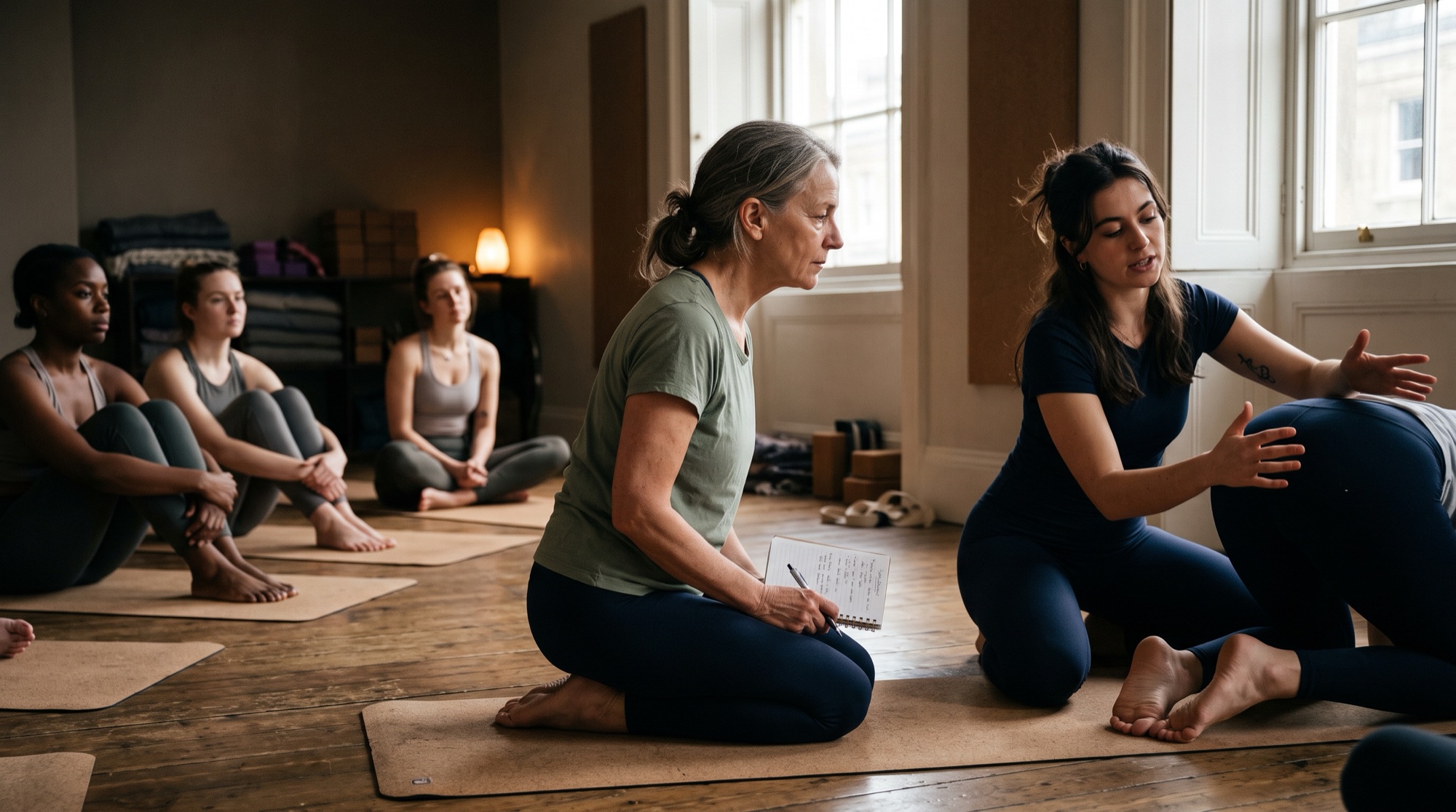
120 hours go to the craft of teaching and putting it into practice — and at least 50 of those are the trainee actually teaching a class. This is the requirement that produces a teacher who can teach.
A minimum of practice is required to join, so contact time builds teachers rather than bringing beginners' practice up to speed — and stronger trainees are never held back by the room.
Safeguarding for vulnerable adults and under-18s, data handled properly, and the insurance a training provider actually needs — not just a teaching policy.
Past accreditation is not current accreditation. The standard is re-checked over time, and the mark comes down the moment a course's standing ends.
Of the 200 hours, 120 are spent on the craft of teaching and putting it into practice — and at least 50 of those are the trainee teaching a real class, within a class structure.
A course may not spend its contact time bringing a beginner's practice up to speed, either. A minimum of experience is required to join — so the hours build teachers, and the trainees who are ready don't wait on the ones who aren't.
Practise the thing from the first day, and you can do it from the day you qualify. That is the whole point of a Foundation course — and the reason ours produces teachers who feel ready.
YogaPros does not tell you how to run your course. It requires only that a student can see how, before they enrol. You set it. We make it impossible to hide.
Every accredited Foundation course carries a verified record — the standard it meets, in the open, on the YogaPros ecosystem.
We don't ask anyone to trust us. We make the course easy to trust.
Meeting the standard makes a course accredited. The Trainee Success Score shows how far beyond it a course goes — mentoring, an apprenticeship, business modules, an open assessment day, a reading list, and more.
Every best practice in place adds to a percentage, shown on the course's listing in the YogaPros ecosystem. It is entirely optional, and never affects accreditation. It is pure credit for going further.
You submit a course. It is assessed against the standard on this page — not a matter of opinion. It passes, it passes with a short list to put right, or it is declined and can be resubmitted once met.
Before you apply, you should be able to read this and know exactly where you stand. That is the point of a standard worth holding.
Put your course on the record — verified, transparent, and impossible to mistake for a weekend certificate.
Standards that actually mean something.